

INTERVIEWS
In collaboration with the director Elpida Skoufalou, Dipylon Society inaugurates a new series of interview-documentaries featuring archaeologists from the Archaeological Service, bringing into the spotlight the people who dedicated their lives and work to uncovering the history of Athens. Through personal testimonies, field narratives, and memories from significant excavations, the scholars behind the discoveries are given a voice, sharing their experiences and revealing the fascinating process of archaeological research.
At the same time, the series sheds light on the city’s “hidden” monuments: antiquities brought to light during rescue excavations, buried remains concealed beneath modern streets and neighborhoods, and sites that, although crucial to understanding Athens’ past, remain largely unknown to most residents and visitors. Through the accounts of the excavators, different facets of a multilayered and timeless city emerge—one that continues to captivate beneath the fabric of the modern urban landscape.
We hope that this initiative will contribute to a broader understanding of archaeology as a living process of knowledge and discovery. It is our conviction that the history of a city is written not only by its monuments, but also by the people who devoted years to uncovering, studying, and protecting them. This series seeks to illuminate precisely that relationship: the silent encounter between the archaeologist and the find, between the modern observer and the traces left by those who lived centuries ago. It is an invitation to discover not only the unknown Athens hidden beneath our feet, but also the people who taught us how to see it.

GEORGE KAVVADIAS
George G. Kavvadias is a distinguished archaeologist and holder of a Ph.D. in Classical Archaeology from the Aristotle University of Thessaloniki. Since 2026, he has served as Acting Director of Publications and Digital Applications at the National Archaeological Museum. He also served for a decade as Head of the Vase and Minor Arts Collection and of the Bronze Collection at the National Archaeological Museum, and is a Corresponding Member of the German Archaeological Institute. He has participated in, as well as directed, excavations at important archaeological sites in Athens, Argos, and the Argolid. His extensive scholarly work has gained international recognition, with research interests focused on ancient Greek pottery and Attic vase painting.
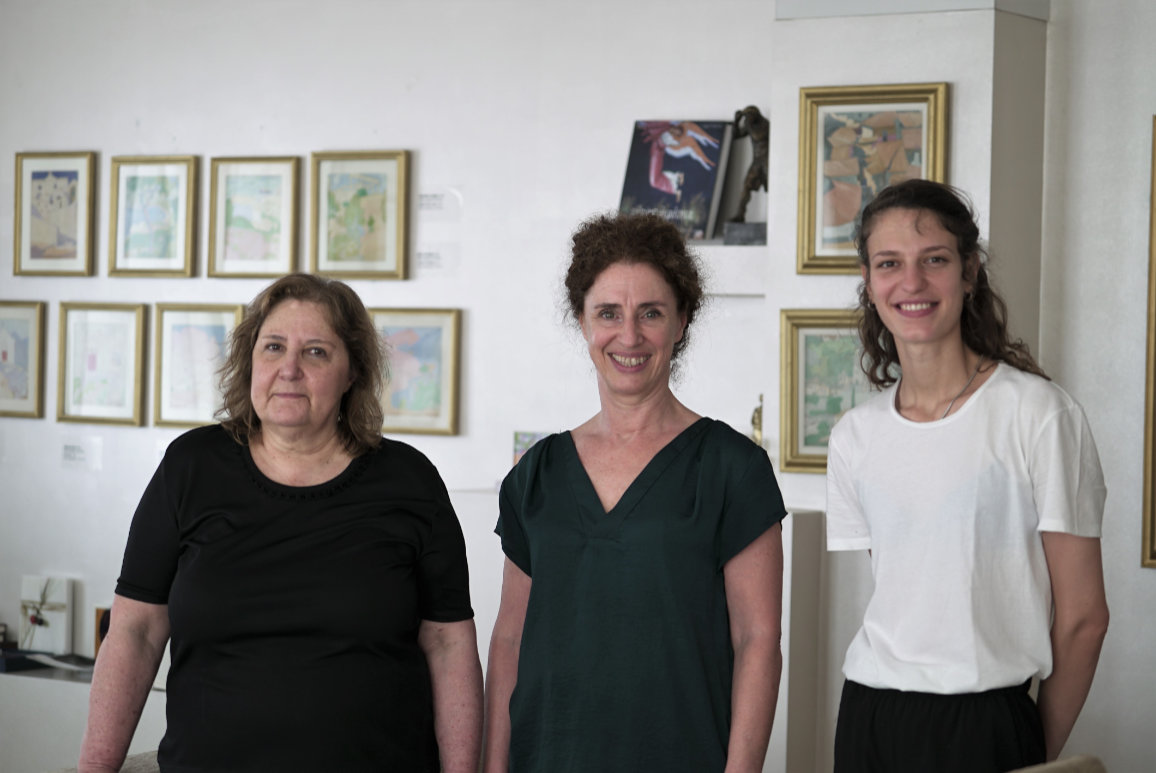
OLGA ZACHARIADOU
Olga Zachariadou studied Archaeology at the Department of History and Archaeology of the National and Kapodistrian University of Athens. In 1977, she joined the Ministry of Culture as an archaeologist, where she served until her retirement in 2010. She was initially appointed to the 22nd Ephorate of Prehistoric and Classical Antiquities of the Dodecanese, where she carried out numerous rescue excavations and surface surveys on Rhodes and other islands of the Dodecanese (Karpathos, Chalki, and Tilos). She also directed the systematic excavation at Trianta (Ialysos) on Rhodes, which brought to light part of the island’s Minoan–Mycenaean settlement.
In 1983, she was transferred to the 3rd Ephorate of Prehistoric and Classical Antiquities of Athens, where she conducted numerous excavations, mainly in areas affected by major public works, such as the junction of Lenorman and Konstantinoupoleos Streets and at the National Resistance Square (Kotzia Square).
From 1992 onwards, she supervised major excavations carried out for the construction of the Athens Metro in the city center and subsequently directed the excavation at the fourcourt of the Hellenic Parliament. As the archaeologist responsible for the overall archaeological works related to the Metro project, she not only coordinated the excavation program but also contributed to the organisation of archaeological exhibitions at the Metro stations (Syntagma, Panepistimio, Aigaleo) and at the Museum of Cycladic Art. She was also responsible for the removal of ancient architectural remains uncovered during the excavation of the Syntagma Metro Station and their subsequent relocation and reconstruction at the Zografou University Campus. In addition, she was involved in the creation and enhancement of archaeological sites in central Athens, including Kotzia Square, Aiolou Street, Syntagma Square, and the Zappeion area.
From 1998 to 2010, she served as Deputy Director of the 3rd Ephorate of Prehistoric and Classical Antiquities of Athens. She has published articles on excavations in Rhodes, Karpathos, and Athens and has participated in conferences and scientific meetings in Greece and abroad, presenting papers on Athenian topography, a field that forms one of her main research interests. She has also served as Secretary General and Vice President of the Association of Greek Archaeologists.